
Sales Intelligence.
Know who to call, what to say, and what happened. Every company you are about to call is researched first: website, register data, news, LinkedIn, Google reviews. Your reps get a call plan with the need, the arguments and the objections, and a CRM built for cold calling. Not an autonomous SDR: a team that makes your people faster.
kr 9 990 a month ex VAT · Up to 15,000 leads a month
Research, a plan for the call, and the record of what happened.
Research every company first
Norwegian companies from the register and verified contact data: revenue, employees, roles, contacts. Then the website (a real audit: SEO, speed, security, content gaps), the news, the LinkedIn page and the Google reviews, gathered into one dossier a rep reads in two minutes.
A plan for the call
The Sales Intelligence agent turns the dossier into a playbook: the need this company most likely has, the three products worth pitching and why, the questions to ask, and the objections with an honest answer to each. Facts are marked as facts; guesses as guesses.
The record of what happened
Log the outcome in one click, take notes under "If they push back" while you talk, and the next call plan reads them. Deals move through a pipeline with stages and value; meetings land in the rep's calendar; the desk shows who to call today and what you promised.
The workspace a rep lives in.
Lead Research
Import a list or pull companies by industry, size and county. Each one is researched automatically in the background and lands with a dossier, a website score and a suggested angle.
Website check
A real scan of any address, run by hand while you are on the phone: what the site does well and where it loses customers. The specific opening that a generic pitch never has.
Call playbook
Need, arguments, discovery questions, objections and answers, per company. The fact-checker reads it against the research before it reaches the rep.
Call notes and outcomes
Six outcomes, one click each. Notes saved with the lead and carried into the next plan and the next e-mail.
Deals and pipeline
Stages, value, probability, the biggest weighted deals first. Won and lost close the loop back to the lead.
Inbox and meetings, together
When a customer replies, the inbox drafts the answer and suggests a time for a call. You approve, the customer accepts, and the meeting lands in Meetings and in the rep's Google Calendar with the invitation sent. No copying between tools.
Phone numbers
From the register and from verified contact data; where a number is missing, one-click 1881 and Gule Sider searches on the named decision maker.
The desk
One page per rep: calls owed today, callbacks promised, meetings this week, what was won this month.
What a rep sees, in order.
The actual pages, from the batch of companies to the meeting in the calendar. One real lead, unedited.
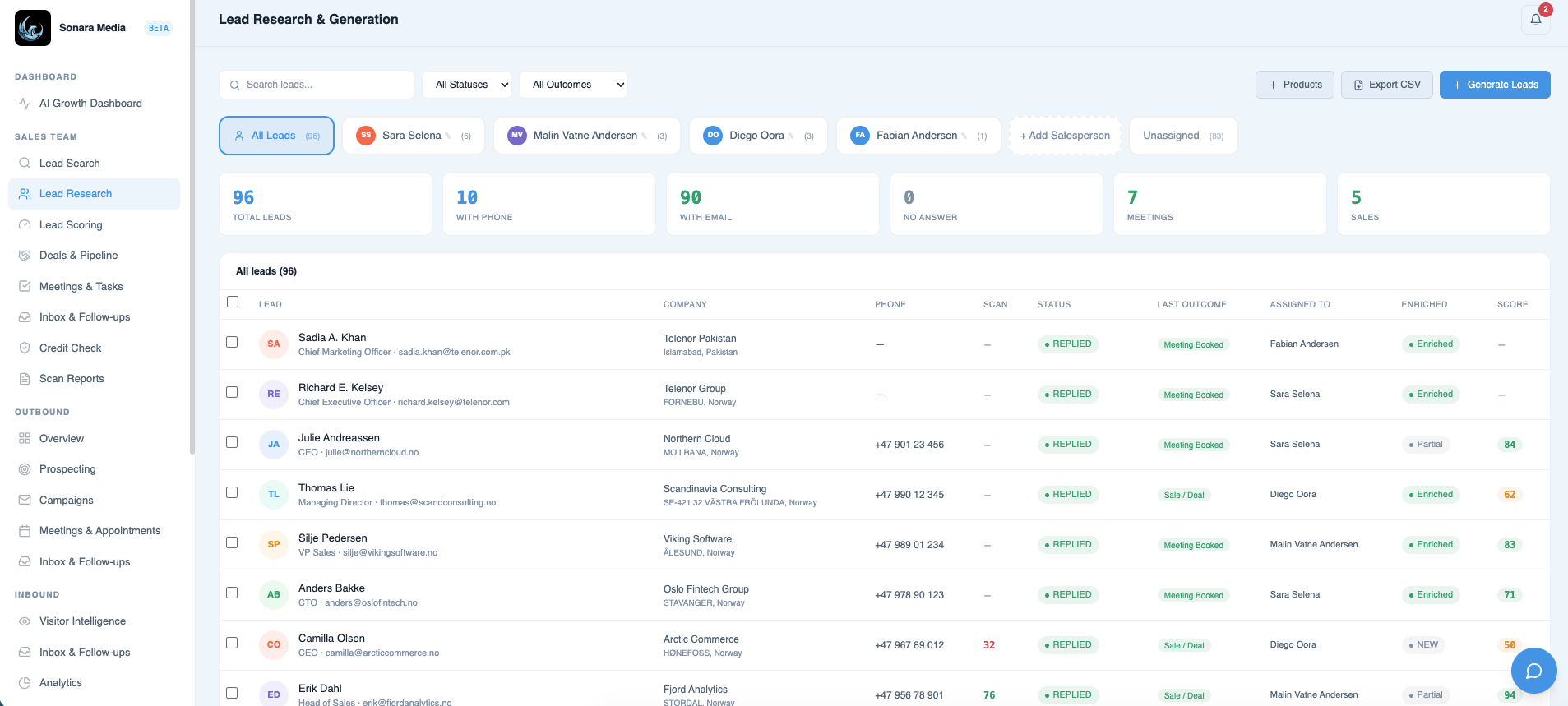
813 leads to work.
Total, researched, with a phone number, meetings, sales, and the "Needs you" box: callbacks promised, leads nobody owns, leads not researched yet. Below it, Generate Lead Batch: category, industry, county, legal form, company size, and fifty companies arrive with the research already running.
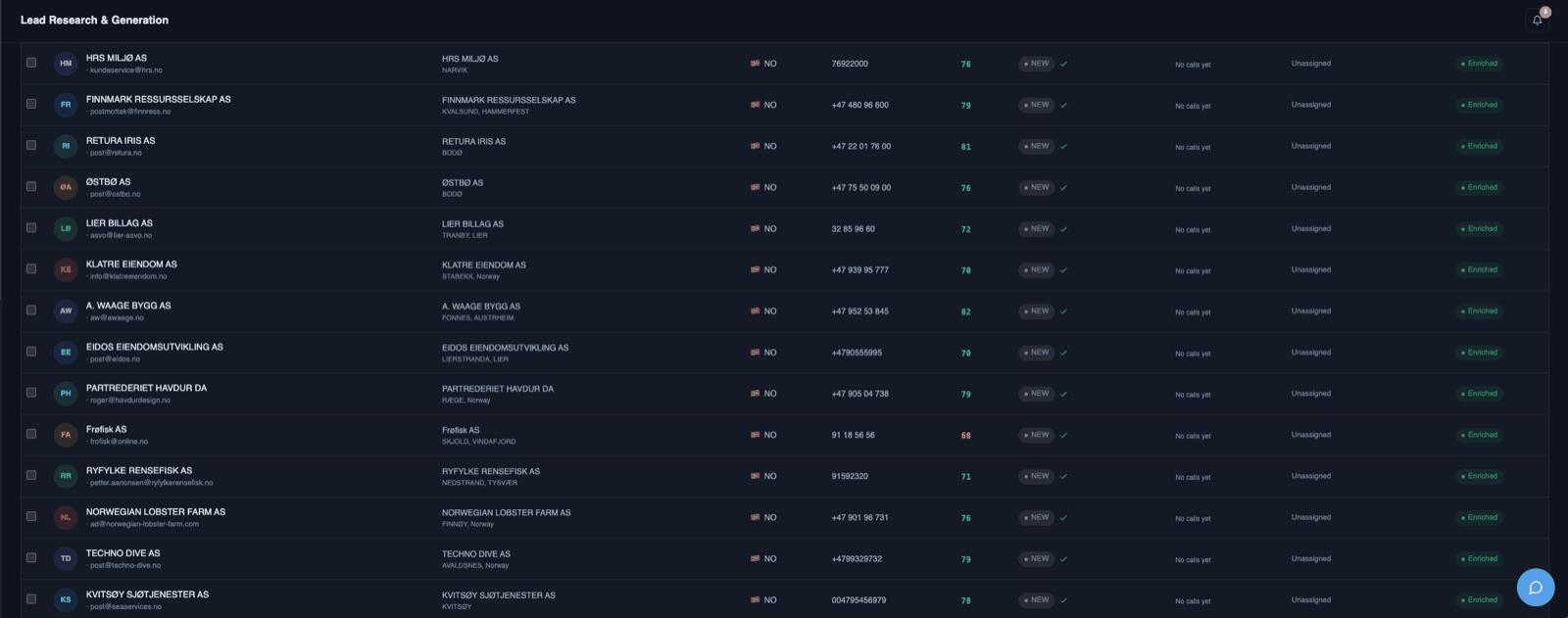
Every company with a score and a status.
Company, contact, phone, website score, stage, calls made, owner, and whether the research is done. Tick a few and assign them to a rep, or open one.
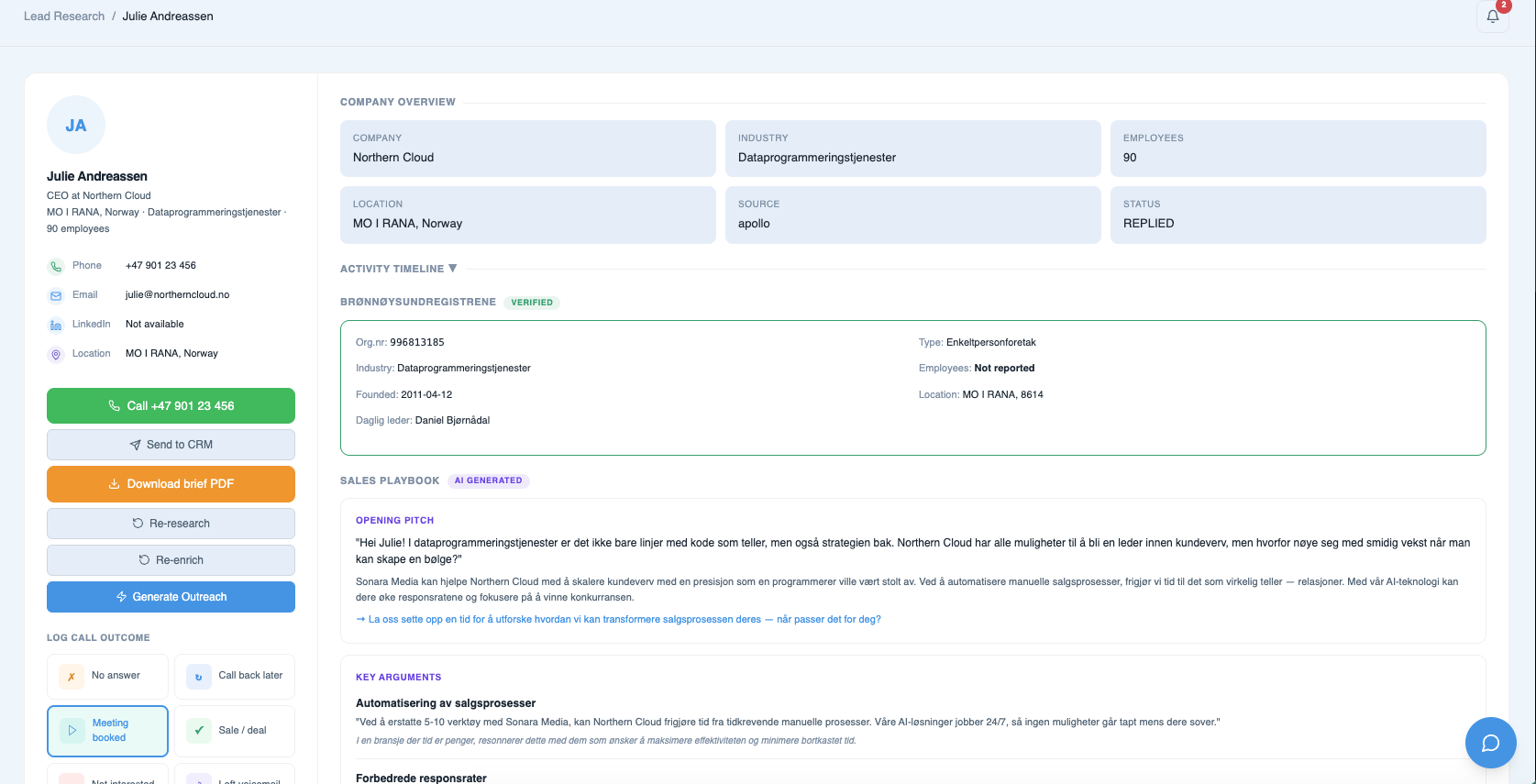
Register data and a website score before you dial.
Sixteen website scores (UX, SEO, security, performance, accessibility and more), the register panel with org number, roles, auditor and accountant, and this year's revenue, operating result and assets. Call, send to CRM, download the brief as PDF or generate outreach from the left column.
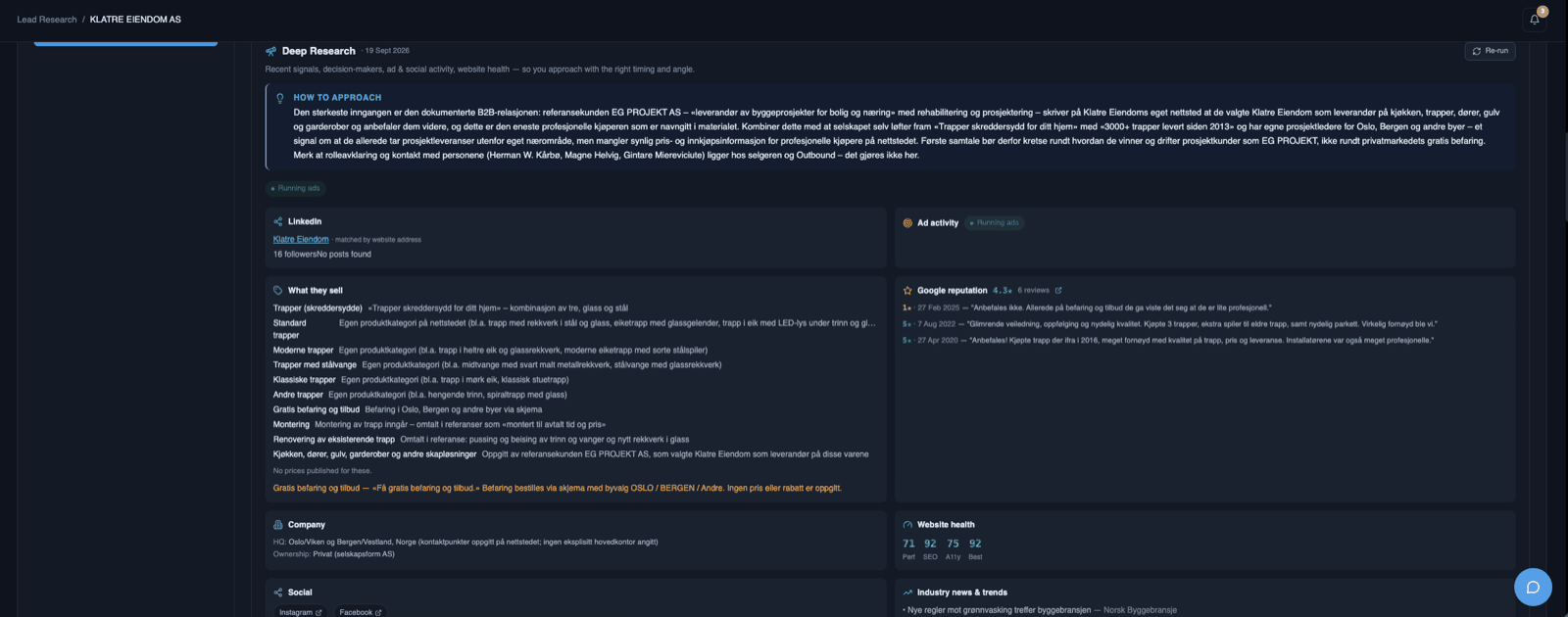
How to approach, in one paragraph.
The agent reads the website, the LinkedIn page, whether they are running ads, the product list and the Google reviews, and writes the way in: which reference customers they name, what they actually sell, what a one-star review says. Re-run whenever you like.
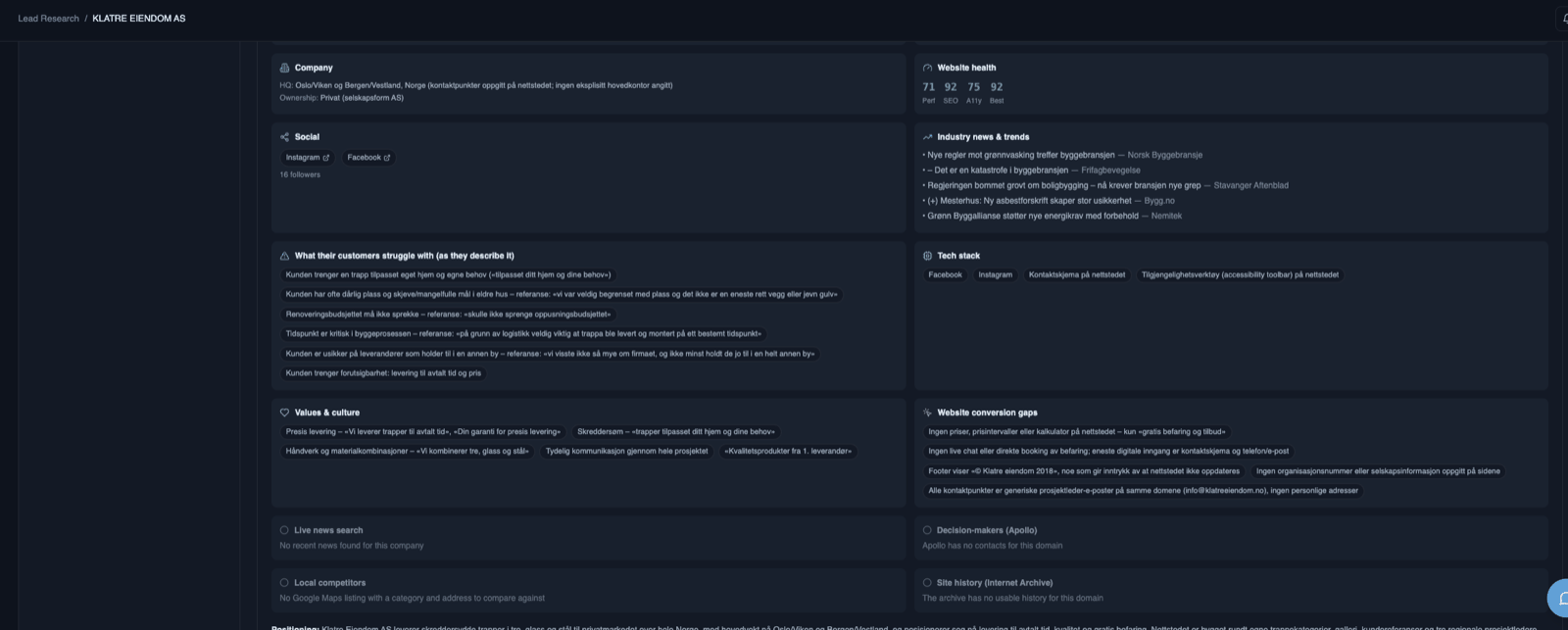
Their customers' words, not ours.
Industry news, tech stack, values and culture, what their customers complain about in their own words, and the conversion gaps on the site: no prices, no booking, a footer that still says 2018.
The industry, the recommendation, the hypothesis.
What the sector is like for a firm this size, the one product worth recommending with direct and indirect arguments, what not to bring up on this call, and "Before you dial": one hypothesis, the evidence behind it, and the line that says it stays a hypothesis until the call confirms it.
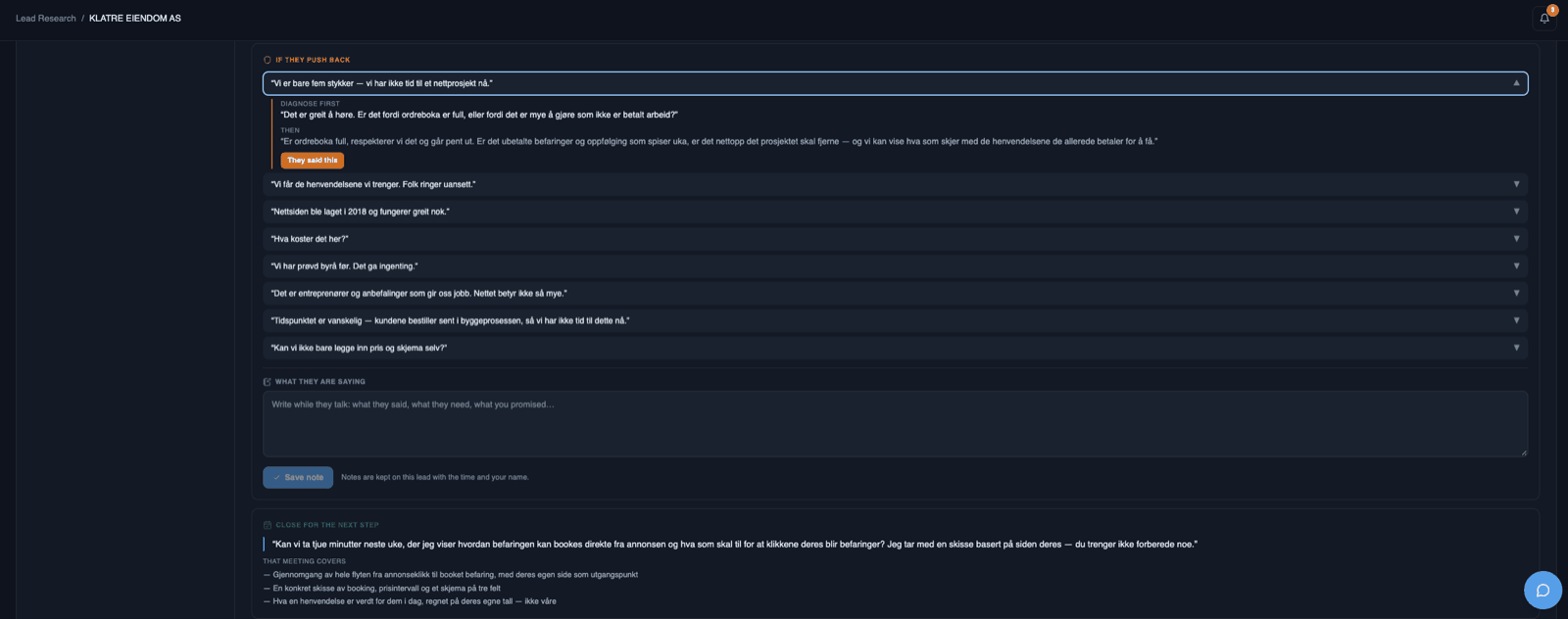
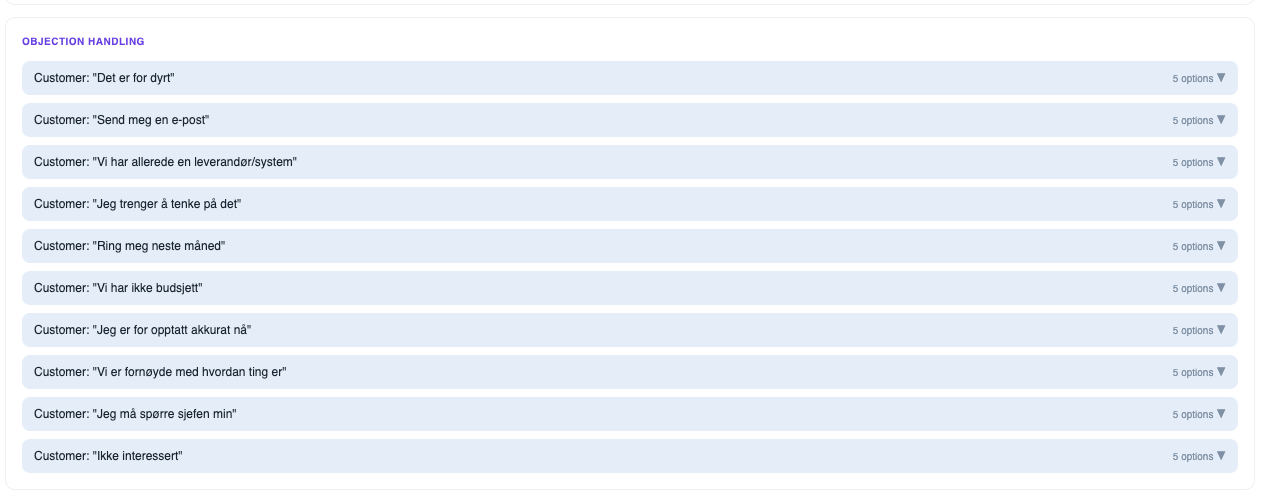
Eight objections, each with a diagnose-first answer.
The objections in their words, a question to ask before answering, then the answer. "They said this" logs it on the lead. A notes box you type in while they talk, saved with the time and your name. Then the close: the meeting to ask for and the three things it covers.
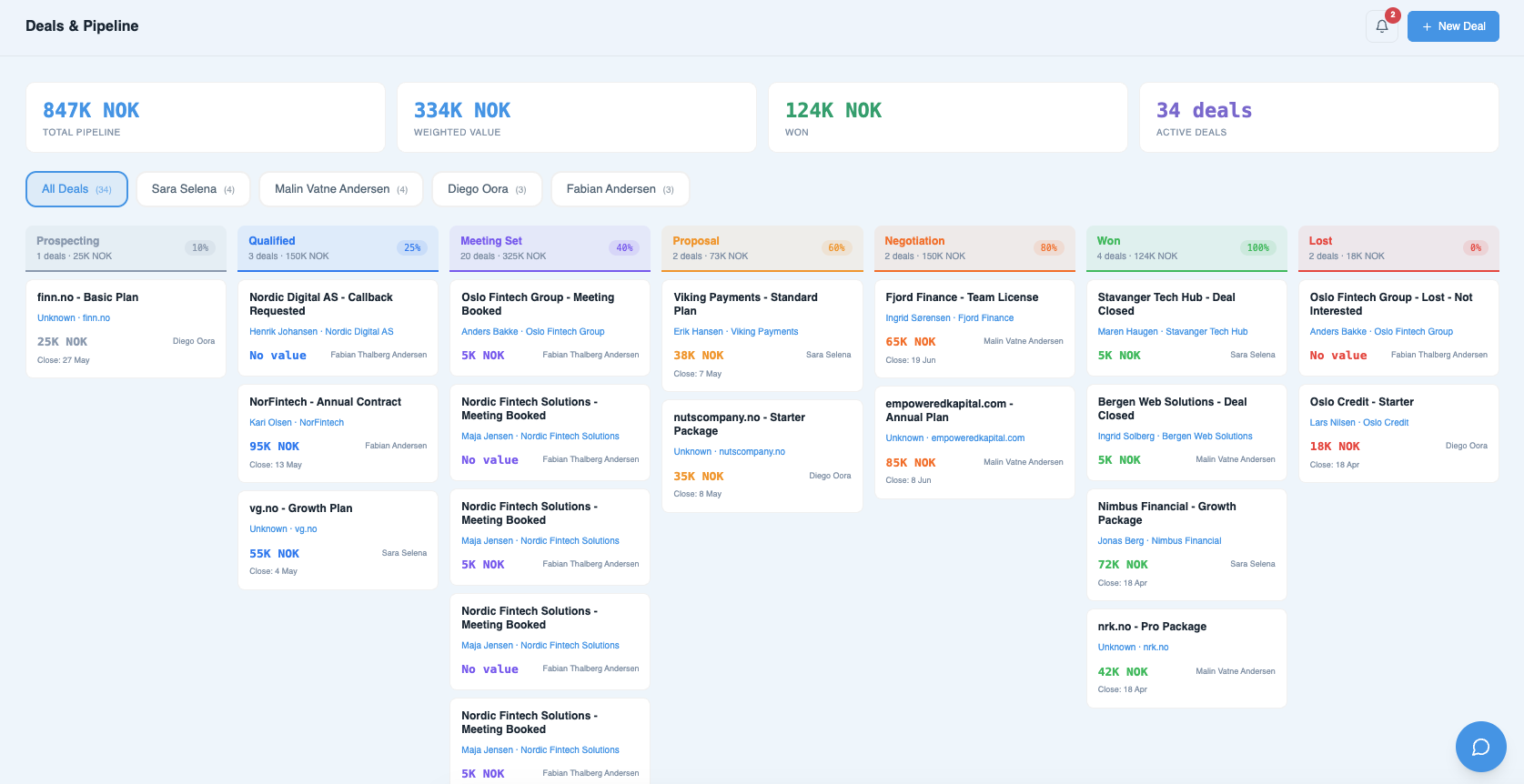
21 deals on the board.
Total pipeline, weighted value, won, active deals, and the "Needs you" box: open deals with no value, callbacks promised, meetings booked but not closed, no answer yet. Below, the board: one column per call outcome with the deal count, the value and the probability, from "No answer" at 5 % to "Sale" at 100 %.
From a company name to a plan for the call.
Bring the companies
Upload your list, or describe the segment and pull companies with their contacts.
Research runs by itself
Register, website, news, LinkedIn, reviews: gathered in the background, a dossier per company within minutes.
Read the plan, make the call
The playbook opens with the need and the three products to pitch. Log the outcome and your notes as you go.
Book and track
A reply in the inbox comes with a suggested call time; the customer accepts and it is a meeting in Meetings and in the calendar, and a deal in the pipeline. A no is remembered, so nobody calls them again next quarter.
Teams that sell by phone and prepare by hand.
Founders who still do the calling
You know the pitch; you do not have an hour per company to prepare it. The dossier and the plan take that hour away.
Small sales teams
Two to five reps who close well and research badly. Every call starts with something specific about the company.
Managers who want the record
Outcomes, notes and deals in one place, per rep, without asking for a spreadsheet on Friday.
Companies selling in Norway
Register data and verified contacts for Norwegian companies, from sources built for this market.
Sectors where a specific opening changes the call.
B2B services
Consulting, accounting, marketing, IT. The buyer has heard every generic pitch; a finding from their own website is not one.
Software
Technical buyers reward homework. The audit shows what their site runs and where it is slow before you say hello.
Local and regional businesses
Reviews and register data tell you who is growing and who is struggling, by municipality.
Recruiting and staffing
Open roles from the company's own careers page are the reason for the call.
Financial services
Revenue, solvency and board from the register before the first contact.
Agencies
Your buyer is someone else's founder. "Your checkout has no SSL" opens more doors than "we do web".
Norwegian data, your calendar, your CRM.
- Norwegian company register and verified contacts
- Brønnøysundregistrene
- Google PageSpeed
- Google reviews via Serper
- Bright Data (LinkedIn company pages)
- Google Calendar
- HubSpot and Pipedrive sync
- Excel and CSV lists
The rule that holds all of it together: the AI writes drafts and reads data; a person decides. Nothing is sent, booked or claimed without approval, and every claim is checked against the research before you see it.
Stop preparing calls by hand.
Book a 30-minute call. We will open the live platform on one of your own prospects and tell you honestly whether it fits.